
Thank-You Email After Interview: Short Templates That Work
Write a thank-you email after an interview that sounds like you, not a form letter: four short templates by interview type, a note-taking routine and a pre-send checklist.

Send a thank you email after interview rounds within 24 hours, keep it to four to six sentences, and build it around one real detail from the conversation. That is the whole method. The detail is what makes the note read as a follow-up to your interview rather than a form letter, and the short length is what makes an interviewer actually read it. Everything below is about getting that one detail down before you forget it, then dropping it into a template that fits the interview you just had.
What a thank you email after interview needs to do, and what it must not do
A thank-you email after an interview has three jobs. Thank the interviewer by name and name the role. Add one specific thing from the conversation. Confirm your interest and refer to the next step or timeline they mentioned. Four to six sentences covers all three and takes under 30 seconds to read.
Timing is simple: send it within 24 hours, and the same day if the interview finished before noon. A note that lands while the conversation is still fresh in the interviewer's mind does more work than a perfect one that arrives on Thursday.
What the email is not:
- Not a second interview answer. Do not restate your experience in full.
- Not a place to re-argue a question you fumbled. A short, calm clarification is fine if a fact was wrong; a defence is not.
- Not a request for a decision. Asking when you will hear back is fine only if you are referencing a date they gave you.
Each of those turns a courtesy into pressure, and pressure is the opposite of what a follow-up is for.
The two-minute note you take right after the call
That note is the raw material for any thank you email after interview.
Before you write anything, capture four things while they are still fresh. This takes two minutes and it is the step most people skip, which is why their emails sound generic.
- Each interviewer's name and role. Spelling matters. Check the calendar invite or the email that set up the call.
- One topic they raised. A project, a problem, a change they mentioned.
- One thing you said that landed. A moment where they nodded, followed up or agreed.
- Any next-step date they mentioned. "We'll decide by Friday" is gold; write it down.
Here is what enough detail looks like, as notes rather than sentences:
Priya Raman, Head of Marketing. Spoke about the rebrand launching in spring, said the hardest part is keeping the sales team on message. I mentioned the launch checklist I built at my last job and she asked how I got sales to use it. Next step: she said the team would decide by next Wednesday.
That is enough to write a specific email in five minutes. If you did a mock interview first, take the same notes straight afterwards; it builds the habit before the real thing. Our guide on how to sounding natural with talking points in a job interview covers the same discipline on the answering side.
The four-sentence structure that works for any interview
Every template below follows the same skeleton. Learn it once and you can adapt it in a minute.
- Thank them by name and name the role.
- Name one specific moment from the conversation and say why it made you more interested.
- One short line connecting your experience to something they said. Not a repeat of your whole answer.
- Confirm interest and reference the next step or timeline they gave.
Sentence three is the one people overdo. It should be a single line, not a paragraph, because the interviewer already heard the full version. The goal is a reminder, not a replay.
Template 1: one interviewer, one conversation
Use this when you spoke to a single person and have their email address.
Subject: Thank you — [Role] interview
Hi [Interviewer first name],
Thank you for taking the time to talk with me about the [Role] today. Hearing how you are approaching [specific topic] made me more interested in the work, especially [one reason it matters to you]. My experience with [short, relevant example] is part of why that resonated. I am still very interested in the role, and I will look out for [next step or date they mentioned].
Best, Jordan
Filled in, for a marketing coordinator role where the interviewer described a rebrand:
Subject: Thank you — Marketing Coordinator interview
Hi Priya,
Thank you for taking the time to talk with me about the Marketing Coordinator role today. Hearing how you are handling the spring rebrand made me more interested in the work, especially the challenge of keeping the sales team on message. Building a launch checklist that sales actually used is one of the parts of my last role I am proudest of, so that problem is familiar ground. I am still very interested, and I will look out for the team's decision next Wednesday.
Best, Sam
If the interviewer was noticeably more senior than you, keep the same structure and trim the third sentence to a clause. Senior readers skim; a shorter note signals you know how to be brief with their time. If they were more junior, do not over-correct by getting chummy. Same tone, same length.
Template 2: panel interview, one email or several
The rule of thumb: send one email to the person who scheduled the interview, addressed to the panel, unless each interviewer gave you their own address and expects a note. One email to the coordinator is easier to handle than four separate ones, and it keeps your details consistent.
Subject: Thank you — [Role] panel interview
Hi [Interviewer first name],
Thank you to you and the panel for the conversation about the [Role] today. [Panel member 1]'s point about [topic] and [Panel member 2]'s question on [topic] both gave me a clearer picture of the work. My experience with [short example] lines up closely with what [Panel member 1] described. I remain very interested and will watch for [next step or date].
Best, Jordan
If you only have the recruiter's address, send the short version: thank them, name the panel members once, mention one detail, confirm interest, and ask them to pass your thanks along. Six sentences maximum. Naming each person once is what shows you were paying attention; a round of separate paragraphs per person reads as effort rather than care.
Template 3: recruiter screen or early call
This one should be shorter and lighter. The recruiter is coordinating the process, not deciding on fit, so a long note about your experience is aimed at the wrong reader.
Subject: Thank you — [Role] call
Hi [Interviewer first name],
Thanks for the call about the [Role] this morning. The details you shared about [specific thing, e.g. the team structure or the interview stages] were helpful, and I have noted [next step or date]. I am interested and will wait to hear about the next stage.
Best, Jordan
Ask nothing beyond the stated next step. A thank-you here is often optional, but it still helps when the recruiter is your only contact and will be the one arranging your next interview. It costs two minutes and leaves a clean impression.
Template 4: final round or after meeting the hiring manager
At this stage the note should reference the last conversation and restate interest in one sentence without renegotiating anything.
Subject: Thank you — [Role] final interview
Hi [Interviewer first name],
Thank you for the conversation about the [Role] today. Our discussion of [specific topic] confirmed why the role interests me, and it built on what we talked about in [earlier stage or conversation]. I am very interested and understand you will be in touch [by the date they gave / after the final interviews].
Best, Jordan
Do not add salary questions, new conditions or a request for a timeline at this stage. Those belong in a conversation with the recruiter, not in a thank-you note, and raising them here can read as pressure. If they said a decision would come by a specific date, mention that date in sentence four and then wait. If the date passes, a short, polite follow-up to the recruiter is reasonable; more on that below.
Weak versus stronger: the same email, rewritten
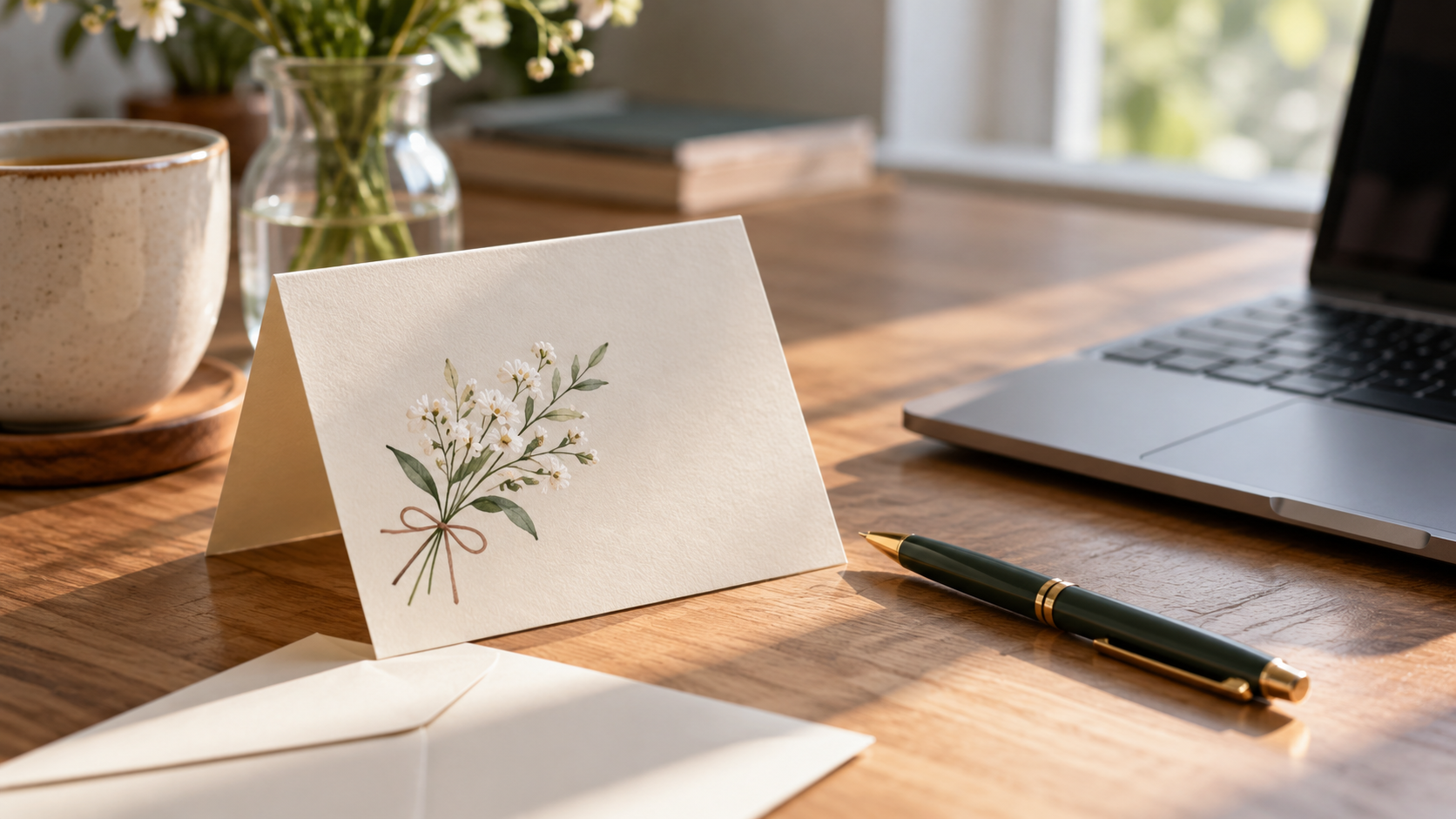
A strong thank you email after interview names one specific moment from the call.
Here is a common version of a thank-you email after an interview, and then the same note done properly.
Weak: Thank you for your time. I look forward to hearing from you.
Stronger: Hi Priya, thank you for the conversation about the Marketing Coordinator role today. Hearing how you are handling the spring rebrand made me more interested, especially keeping the sales team on message. My launch checklist work is close to that problem. I am still very interested and will look out for the team's decision next Wednesday. Best, Sam
Line by line:
- "Thank you for your time" became a thank-you that names the person and the role. The reader knows which interview this is about.
- Nothing specific became the rebrand and the sales-team problem. This is the part that cannot be copied from a template.
- "I look forward to hearing from you" became a reference to the date they gave. It shows you listened and it does not push.
- Cut: "I just wanted to reach out," "I hope this email finds you well," "Please don't hesitate to contact me," and "Thank you in advance." None of them carry information. Delete them and the note gets stronger.
The rewrite is not longer in a meaningful way. It replaces filler with detail.
Three mistakes that make a thank you email after interview backfire
Sending it late or not at all. After 48 hours the note reads as an afterthought, and if the interviewer expected one, silence is the only thing they remember. If you are late, send it anyway with one honest line: "Apologies for the delay in writing." Do not explain at length.
Writing an essay. A long email that repeats your answers or introduces new claims about your experience invites scrutiny you did not prepare for. If you make a claim in a thank-you note, be ready to back it up in the next conversation.
Using it to ask about salary, push for a decision or correct a trivial detail. Each of these turns a courtesy into a negotiation or a distraction. Save salary for the recruiter, save timeline questions for the agreed follow-up, and let a small misstatement go unless it was a material fact about your experience. If it was material, correct it in one calm sentence and move on.
Practise the follow-up before the interview
Practise your thank you email after interview aloud once so it sounds like you.
After a mock interview, write the thank-you note from your notes in five minutes, then read it aloud once. Reading aloud catches the sentences that sounded fine on screen and sound stiff in your voice. It also trains the two-minute note-taking habit, so on the day you are capturing details automatically. If you are working on the live conversation, our guide to communication interview questions covers the answering side; the follow-up is the same skill applied afterwards.
Before you send, run this checklist:
- Names spelled correctly, role named.
- One specific detail from the conversation, and it actually happened.
- No new claims about your experience.
- Next step or timeline referenced.
- Sent within 24 hours.
- Read aloud once.
Keep the note honest. Only mention things that were actually said. A thank-you email is a small piece of evidence that you listen, follow through and can write clearly; it is not a place to perform. Practise it the same way you practise answers, and it becomes a two-minute habit rather than a source of anxiety. You can find more preparation guides on our blog and an overview of honest interview preparation in the the AI Interview assistant guide.
Send your thank you email after interview while the conversation is still fresh
The thank-you email after an interview is a short, specific, honest note sent within a day. Take two minutes of notes, pick the template that matches the interview, swap in one real detail, and read it aloud before you send. Do that today, while you can still remember what the interviewer said.
Frequently asked questions
What if I forgot the interviewer's name or the exact topic we discussed?
Check the calendar invite, the scheduling email or the company's team page before you write. If the name is still unclear, use a neutral greeting and address the note to the person who arranged the interview, asking them to pass your thanks to the panel. For the topic, use the part of the conversation you remember most clearly rather than inventing one. A slightly general detail you actually recall is safer than a precise one you made up.
Should I send a thank-you email after a rejection or after a recruiter says they will be in touch?
After a rejection, a brief note is optional but can be worth sending if you would want to be considered again: thank them, say you appreciated the conversation, and leave it there. When a recruiter says they will be in touch, you do not need to reply at all, though a one-line acknowledgement is fine. In both cases keep it to two or three sentences and ask for nothing.
Is a handwritten note or LinkedIn message ever better than email?
Email is the default because it reaches the interviewer where the process lives and is easy to forward internally. A LinkedIn message can work when you have no email address, but it may be missed. A handwritten note suits a small number of situations, such as a final-round interview at a small organisation, but it usually arrives after the decision is made. If you send one, send the email too.
What if the interviewer told me not to bother sending a follow-up?
Take them at their word and skip it. They were telling you their process does not need one, and sending anyway can look like you did not listen. If you want to close the loop, a single short line thanking them for the conversation is enough, and only if you have a natural reason to write, such as confirming a date they mentioned.
How do I follow up again if I get no reply to my thank-you email?
Wait until the date they gave you has passed, then send one short message to the recruiter or the person who scheduled the interview. Reference your thank-you note, restate your interest in one sentence, and ask whether there is an update on timing. Send it once. If there is still no reply after another week, treat the process as closed and keep applying elsewhere.